Do Air Ducts Need Cleaning? A Practical Guide
Learn when air duct cleaning may be worth discussing, what dust does not prove, and how to request a clear, limited scope.
Air Duct Cleaning Now · October 2026
Content updated: October 11, 2026
Open Spanish edition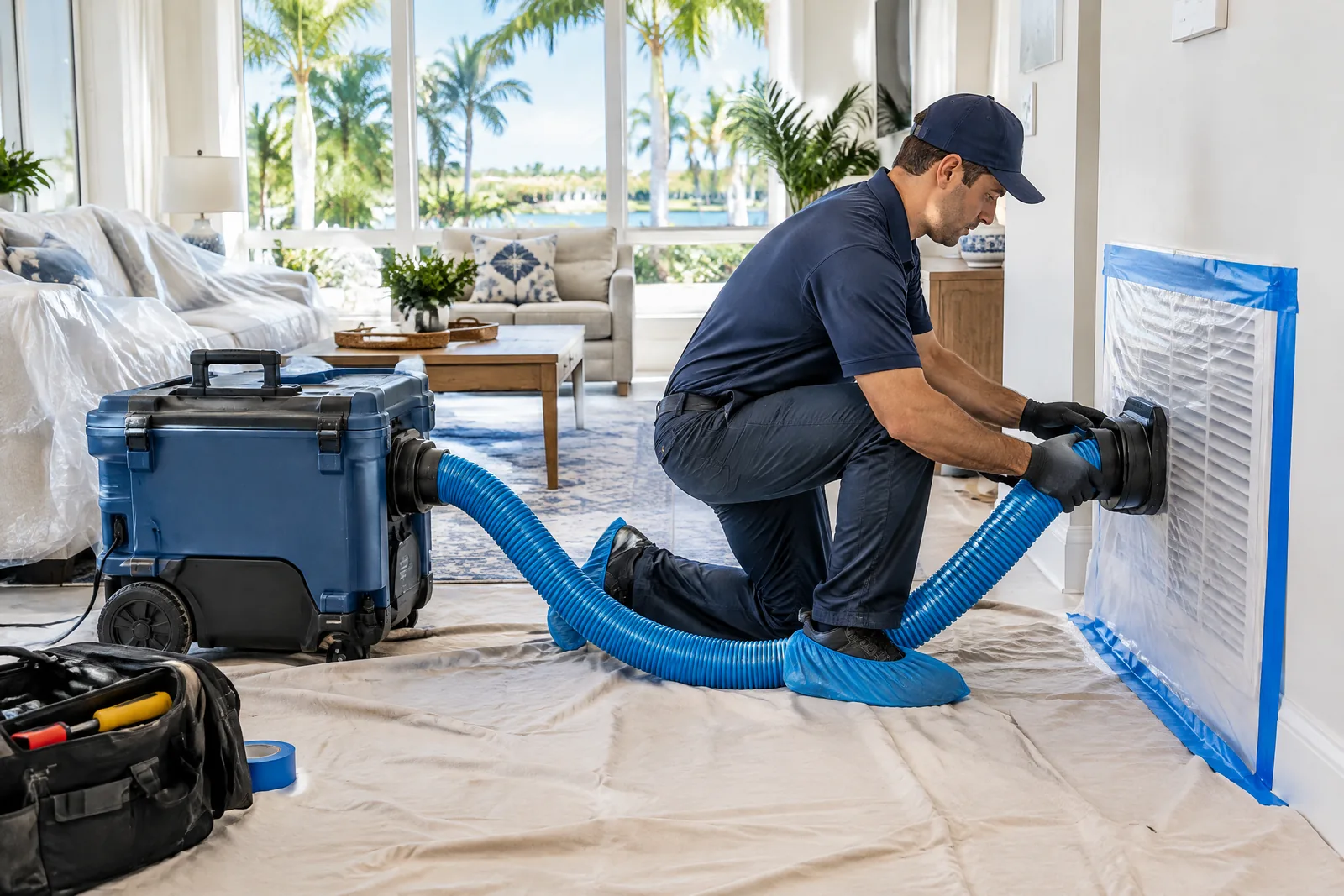
Seeing dust around a vent does not, by itself, show that the inside of a duct system needs cleaning. The EPA does not recommend routine cleaning as a universal home-maintenance task, and duct cleaning has not been shown to prevent health problems. A better decision starts with an observable condition, a defined scope, and a plan for addressing any simpler cause first.
What may justify a closer look
Consider asking for a documented evaluation when there is substantial dust or debris inside an accessible duct section, particles are visibly entering a room through a supply opening, or there is evidence that rodents or insects have entered the ductwork. These observations do not automatically prove that cleaning is needed. Ask the provider to identify the location, explain what can actually be reached, and show you the condition when practical.
A small amount of household dust is not proof of a duct problem. Dust on a register, recurring debris from a nearby surface, or a recently disturbed area may have a simpler explanation. The useful question is not whether a home ever has dust; it is whether a specific, documented condition justifies the proposed work.
Check simpler causes before scheduling
Review ordinary upkeep first. Use the filter type specified for the system and replace it according to the manufacturer’s instructions. Look at the visible register and the surrounding area. Recent construction, an open building leak, a local source of dust, or a problem with the equipment may call for a different response. Cleaning accessible duct sections will not repair a building opening, diagnose every airflow concern, or correct an equipment fault.
If the concern involves unusual moisture, persistent odors, poor airflow, or a mechanical symptom, ask an appropriately qualified HVAC professional to evaluate that separate issue. Do not treat duct cleaning as a substitute for finding the underlying source.
Ask for a written, limited scope
Before approving work, ask which vents and duct sections are accessible, how debris will be contained, what areas are excluded, and how additional work would be presented for approval. A written description should state the property type, access assumptions, included areas, exclusions, and price or pricing method.
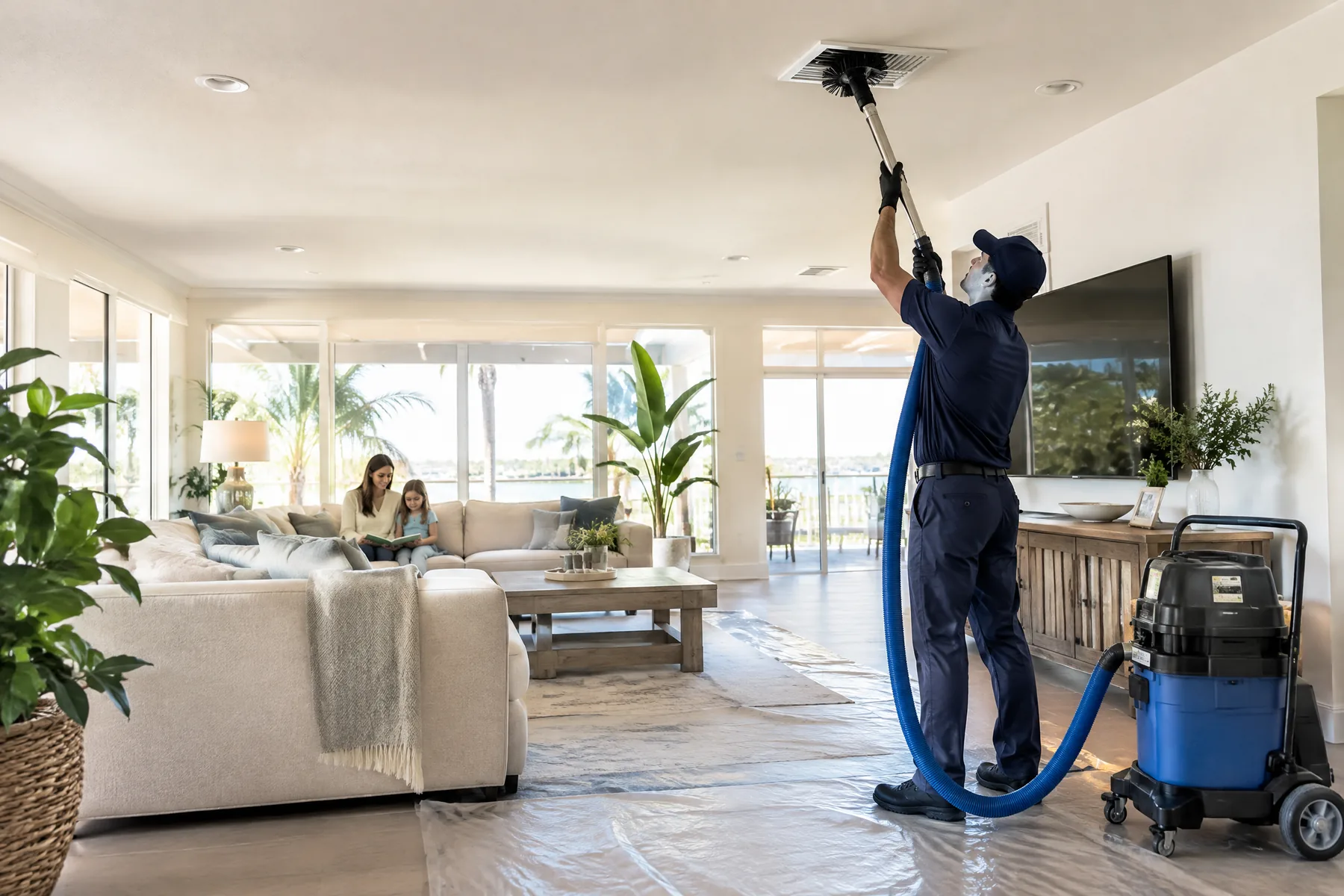
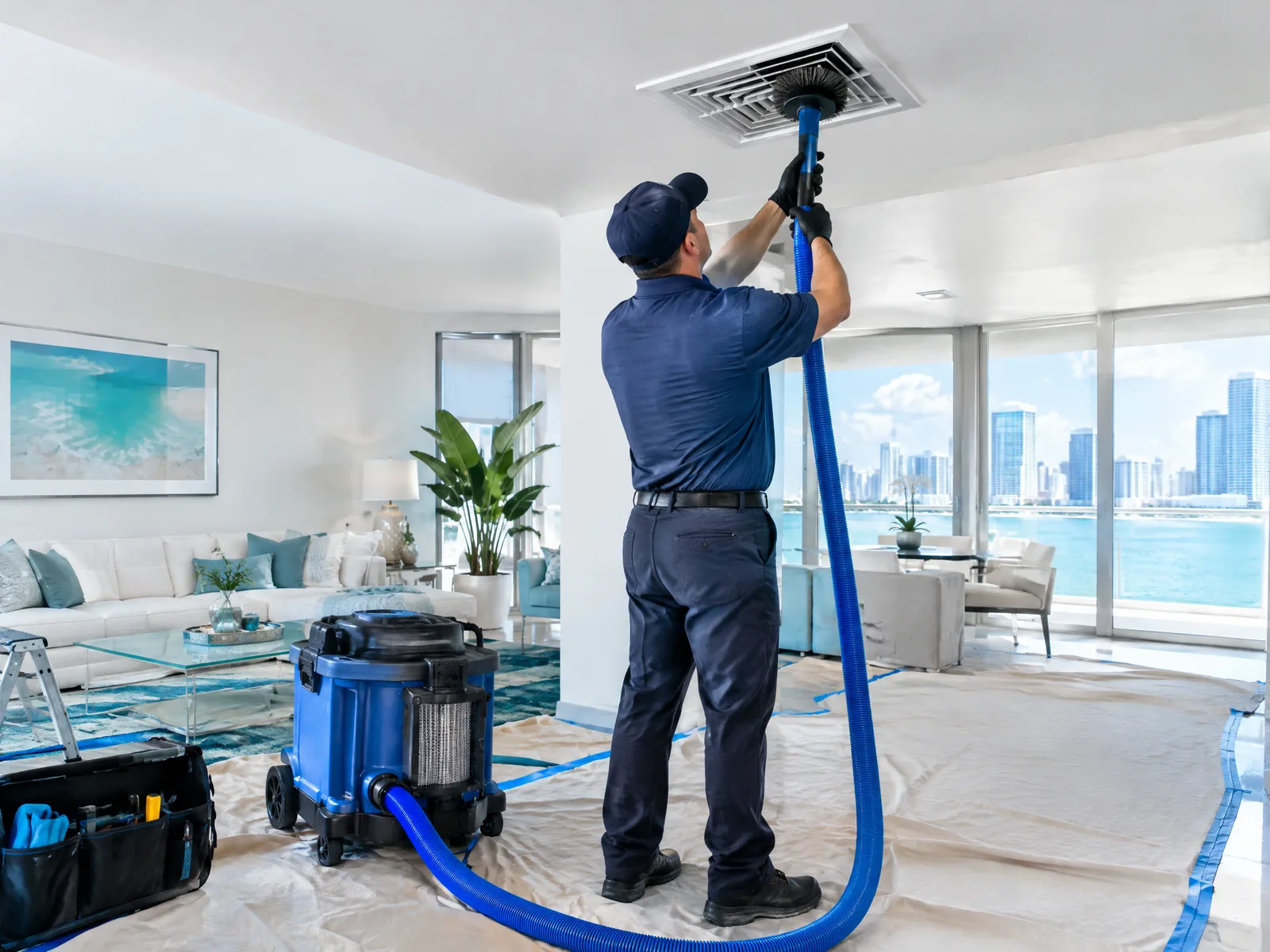
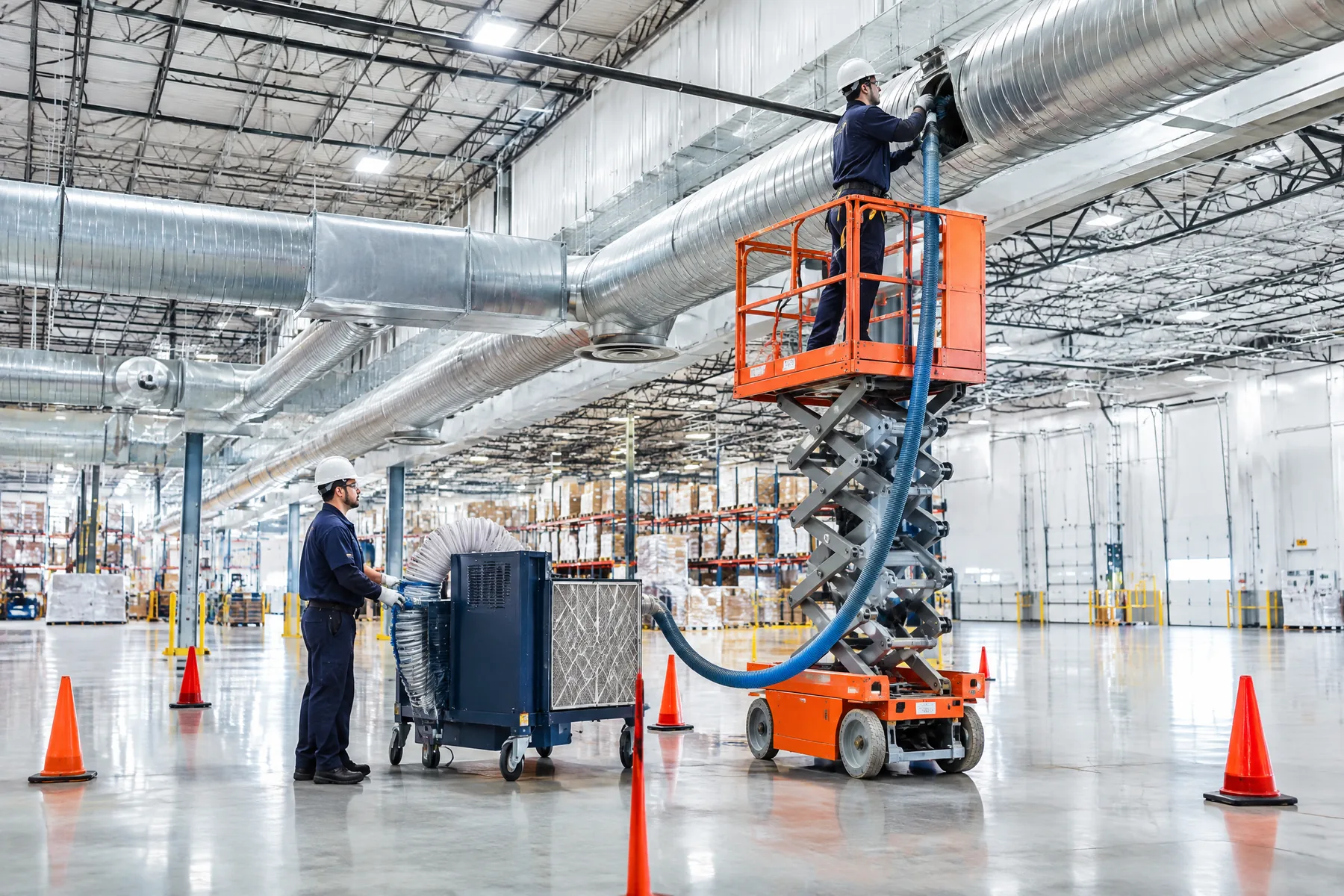
Air Duct Cleaning Now provides residential air duct cleaning, commercial air duct cleaning, and dryer vent cleaning. Its work is limited to accessible vents without disassembling the system: registers and grilles stay in place, and central equipment and system components are not opened or removed. Confirm the address, access, written scope, exclusions, and final price in follow-up before scheduling.
Do not assume health or energy results
A cleaning decision should be based on the condition and scope, not a guaranteed health benefit. The EPA says duct cleaning has not been shown to prevent health problems, and duct-only work is not evidence of improved energy efficiency. Be cautious of claims that promise either result without property-specific evidence. Read the EPA’s consumer guidance on whether you should have air ducts in your home cleaned before comparing proposals.
Dryer vent cleaning is a separate maintenance question. Lint buildup and restricted exhaust can create a fire-safety concern, but cleaning does not eliminate all fire risk or diagnose every drying problem. Follow the U.S. Fire Administration’s appliance-safety guidance and the appliance manufacturer’s instructions.
A practical decision checklist
Before you schedule, ask: What was observed? Where is it located? Can I see it? Which accessible areas are included? What is excluded? What would change the scope? Who will handle a separate equipment or building issue? If the answers are specific and the condition supports cleaning, choose a narrowly defined service. If the answers are vague or no specific condition appears, continue ordinary upkeep and revisit the question only when new evidence arises.
Air Duct Cleaning Now proudly serves Miami-Dade, Broward, and Palm Beach Counties, subject to address and access confirmation. Use the consultation page to request next steps. The fast estimator requires only home or business type, vent count, and phone; any returned range is preliminary planning information and a receipt, not a guaranteed final quote. This guide is general education, not a property diagnosis, medical advice, or guarantee of savings.