Duct Cleaning After Renovation: What to Check First
Renovation dust does not automatically mean duct cleaning is needed. Learn what to document, what accessible work includes, and how to compare scope.
Air Duct Cleaning Now · October 2026
Content updated: October 11, 2026
Open Spanish edition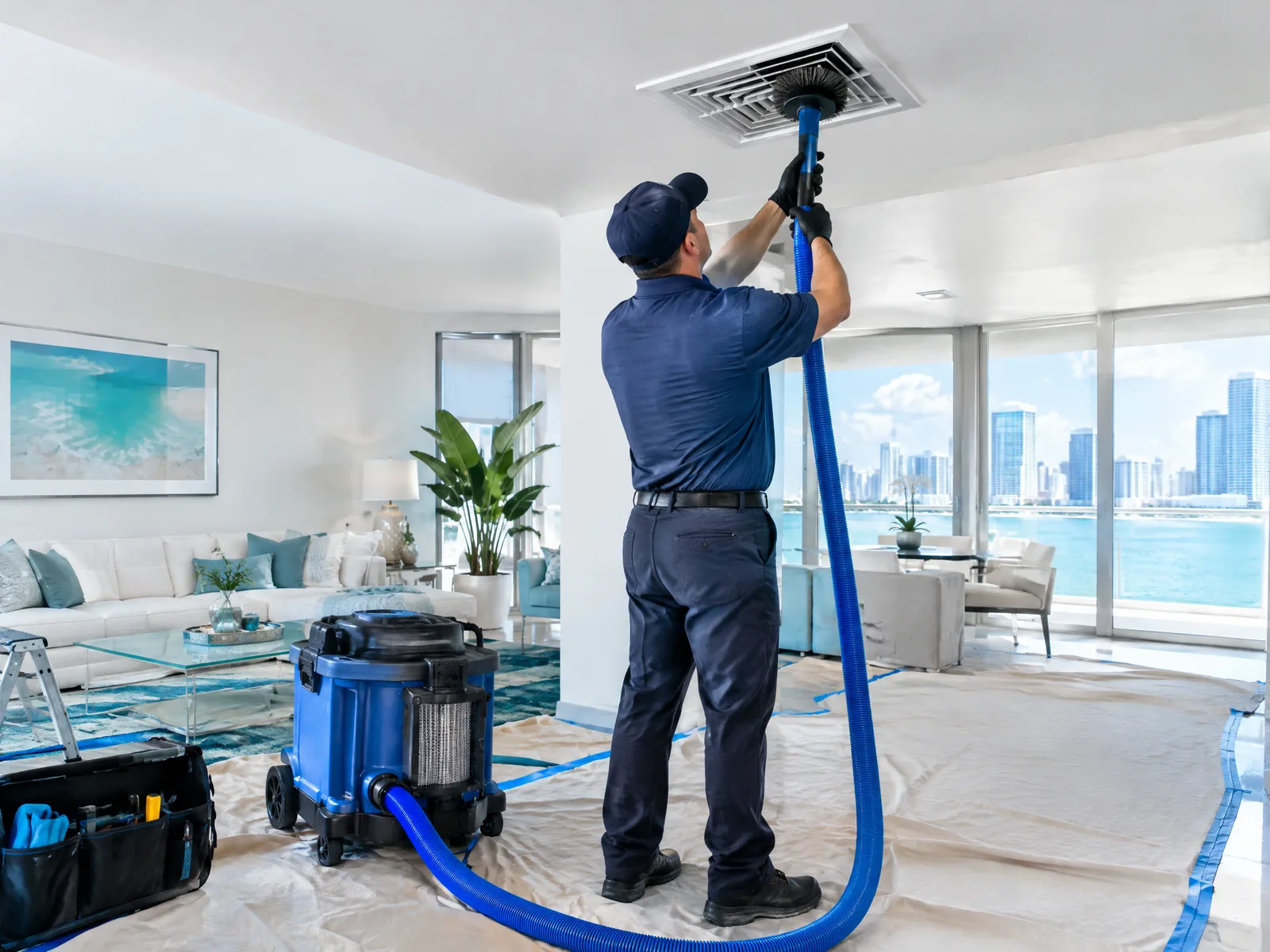
Renovation dust can be frustrating, but it does not automatically mean that duct cleaning is needed. The useful question is whether debris entered accessible duct pathways and whether you can document a condition worth discussing.
Start with the renovation conditions
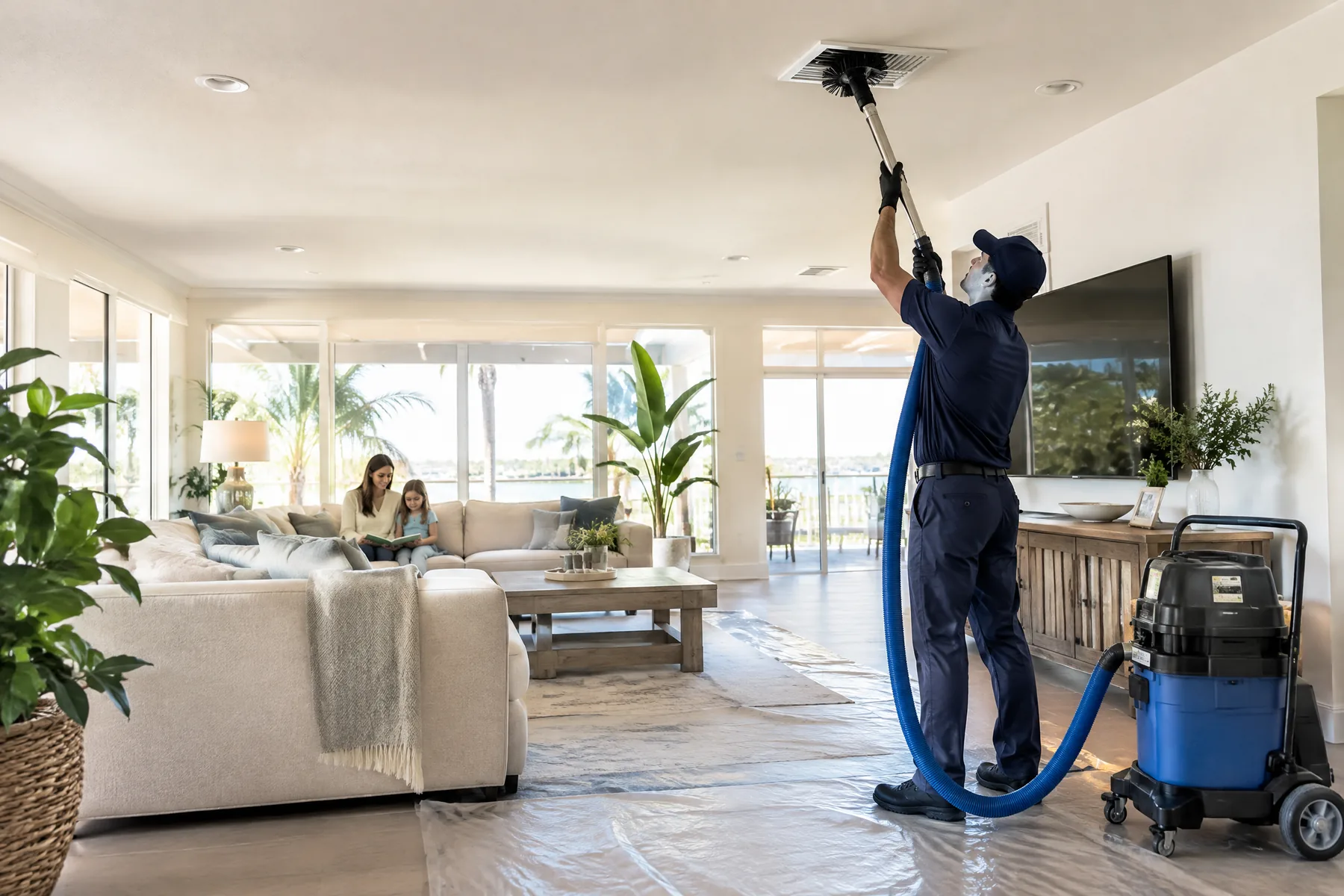
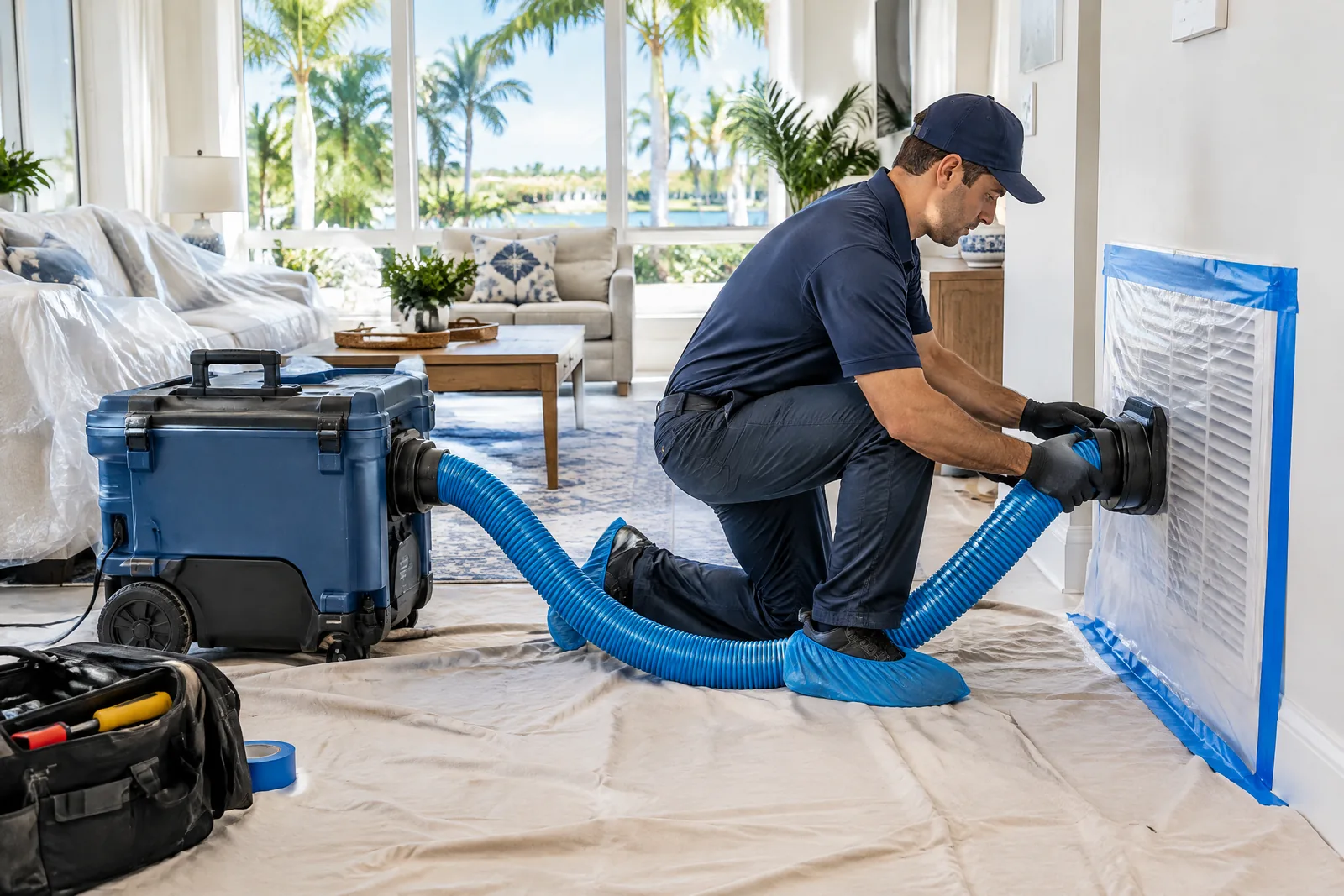
Before or during dusty work, ask the renovation team how they will contain debris and protect supply and return openings. Keep the work zone separated where practical, follow building rules, and note whether the central air system operated while sanding, cutting, or removing materials. If openings were covered, record when covers were installed and removed. These details are more useful than assuming every renovation requires service.
After the main cleanup, inspect several openings. Dust on a grille, wall, or nearby floor can be a surface-cleaning issue; it does not by itself show that debris traveled through the duct pathways. Check the filter according to the equipment maker's instructions and note how quickly it collects dust. Do not use one dirty filter as a diagnosis of the whole system.
Document signs before requesting work
A cleaning discussion may be reasonable when substantial renovation debris appears to have entered an open pathway, visible particles repeatedly emerge from more than one opening, or accessible duct sections show unusual buildup. Take dated notes and, where appropriate, photographs of the condition. Do not remove grilles or open central equipment just to investigate.
The U.S. Environmental Protection Agency consumer guidance says routine duct cleaning is not needed in every home and that a small amount of household dust is not proof that cleaning is necessary. Excessive dust and debris, or particles entering living areas, may justify discussing a documented scope. Cleaning should not be presented as a way to prevent health problems or as evidence of energy savings.
Know what an accessible cleaning scope says
A written scope should identify the accessible vents and duct sections included, exclusions, household protection, and the process for approving changes. Ask whether registers and grilles stay in place and whether the provider will avoid opening central equipment or removing system components.
Air Duct Cleaning Now's stated work is limited to accessible vents and does not include system disassembly. Its active services are residential air duct cleaning, commercial air duct cleaning, and dryer vent cleaning. It does not provide equipment repair, full-system servicing, or a property diagnosis. Arrange any separate evaluation of central equipment or another building condition with an appropriately qualified professional.
Compare the estimate and plan the next step
Compare the written scope with your notes: included openings and accessible sections, access requirements, protection, and the process if the condition differs from the request. In Miami-Dade, Broward, and Palm Beach Counties, confirm coverage for the specific address and access conditions before scheduling.
The online estimator asks for home or business, vent count, and a phone number. An accepted request returns a preliminary planning range and receipt, not a guaranteed final quote. Address, access, written scope, exclusions, and final price are confirmed in follow-up.
See the air duct cleaning quote checklist, whether air ducts need cleaning, and what to check when dust comes from vents.
There is no universal requirement to clean ducts after renovation. This guide is general education, not a property diagnosis, health claim, or guarantee of energy savings. A written service scope should reflect the actual system and property.
If renovation dust keeps returning, separate the questions: where it is appearing, whether the filter is seated and maintained as instructed, whether a door or opening is allowing ordinary household dust to move, and whether particles are visibly released when the system runs. A cleaning visit can address the accessible scope that is agreed in writing, but it cannot determine every cause of recurring dust or replace a separate equipment evaluation.
For dryer vents, use a separate safety decision. The U.S. Fire Administration advises regular cleaning of dryer vents and filters as part of appliance-fire prevention. Cleaning does not eliminate fire risk or diagnose every drying problem; stop using an appliance that seems unsafe and obtain appropriate service. Read the USFA appliance-safety guidance for general prevention information.
Related service: Residential air duct cleaning