Miami Condo Dryer Vent Cleaning: Access Checklist
Planning dryer vent cleaning in a Miami condo? Confirm the route, building access, safe scope, and warning signs before scheduling service.
Air Duct Cleaning Now · October 2026
Content updated: October 11, 2026
Open Spanish edition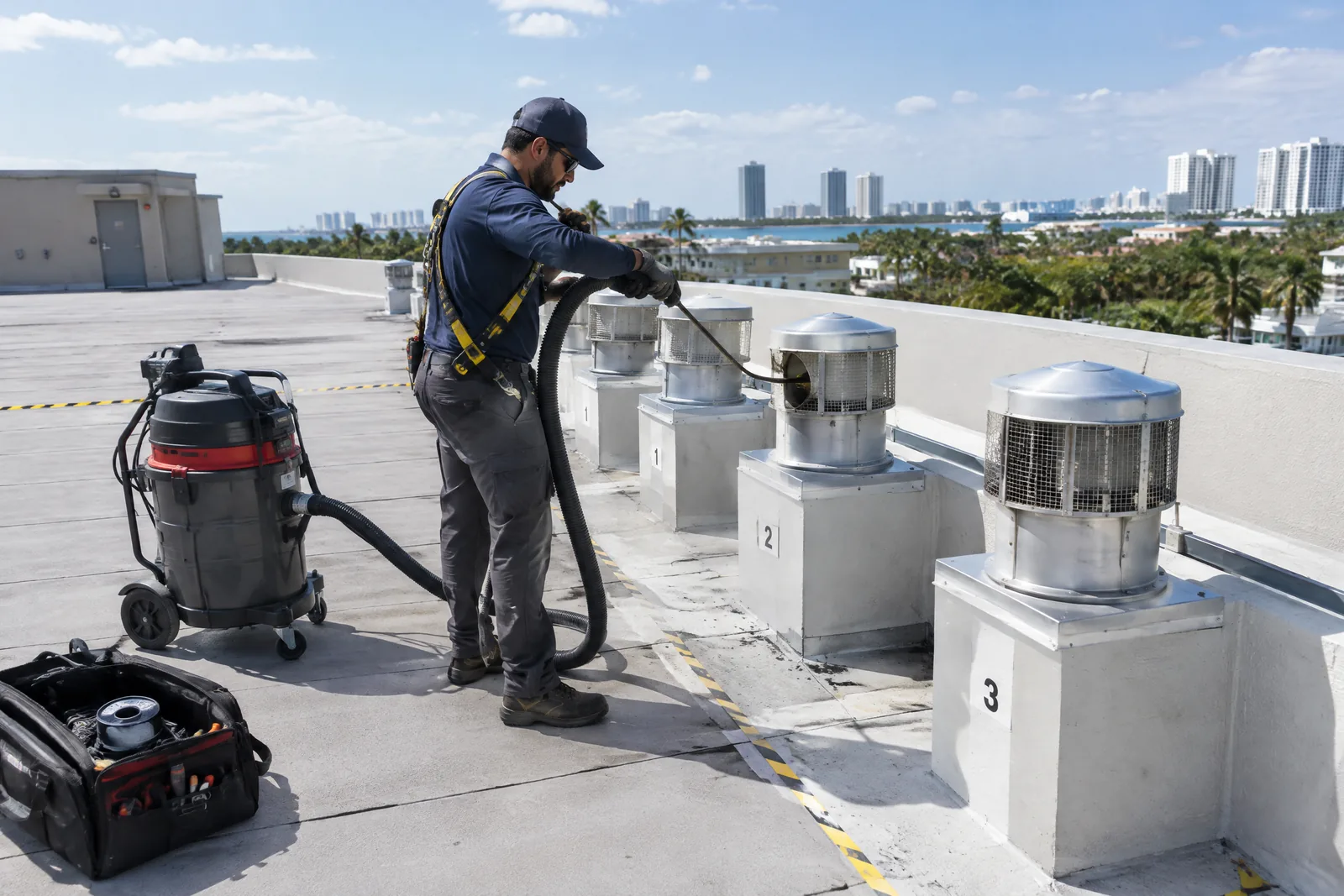
Dryer exhaust planning is different in a condominium. The vent from one unit may run through a wall, ceiling, shaft, or other area controlled by the building, and the visible outlet may not reveal the full route. Before scheduling, confirm what belongs to the unit, what requires building permission, and what can be reached safely.
This guide is for planning and comparison, not a diagnosis of a particular property. Air Duct Cleaning Now serves Miami-Dade, Broward, and Palm Beach Counties; the address, access conditions, written scope, exclusions, and final price are confirmed before work.
1. Confirm the unit's route and permissions
Ask the property manager, association, or maintenance contact where the dryer connects, where the exhaust leaves the building, and whether any part of the route is shared. Ask how the exterior outlet or a service area may be reached, and whether a key, escort, work-hour restriction, parking instruction, or elevator reservation is required. Do not enter a roof, shaft, mechanical area, or other restricted space on your own.
Have the unit address and a reliable contact ready. Coverage is not inferred from a city name: the service address and practical access are reviewed before an appointment is accepted. If management has a building rule or access form, obtain it early so the written scope reflects the real conditions.
2. Compare a written cleaning scope
A useful scope says which accessible dryer-vent sections and outlet will be addressed, how lint will be collected, what preparation the resident or building must provide, and which sections cannot be reached safely. Ask what happens if the route is blocked, crushed, disconnected, or otherwise outside the agreed access. Shared portions may require separate authorization or a building-appointed party.
For this service, work is limited to accessible vents without disassembling the system. Registers and grilles stay in place; central equipment and system components are not opened or removed. Dryer-vent cleaning is not an appliance repair, electrical repair, building repair, or full-system service. If a concern requires one of those evaluations, ask the appropriate qualified building or appliance professional rather than treating cleaning as a diagnosis.
3. Prepare the laundry area and appointment
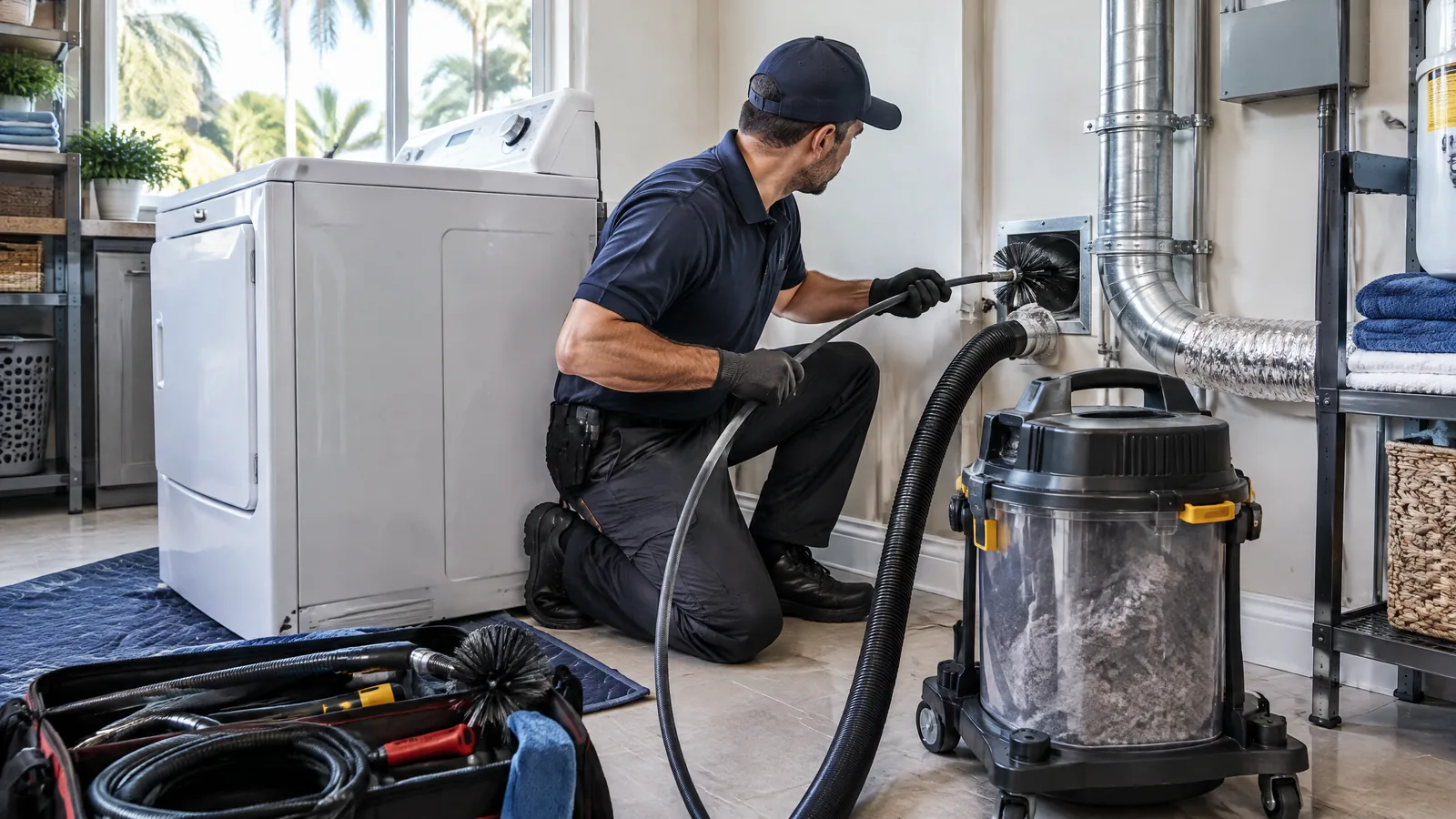
Follow the provider's arrival instructions, clear the area around the dryer, secure pets, and make sure an authorized adult can provide access if required. Confirm whether the building needs advance notice and whether the dryer can be moved or disconnected; never move an appliance or disconnect utilities unless the responsible instructions allow it. Photographing a visible outlet or sharing management's route information can help with planning, but it does not replace an on-site access review.
A fast estimator can request Home or Business, vent count, and a phone number. Its result is a preliminary planning range and receipt, not a guaranteed final quote. Address, access, written scope, exclusions, and final price are confirmed in follow-up. Do not assume a range covers inaccessible shared sections.
4. Know the safety limits
The U.S. Fire Administration identifies failure to clean as a leading contributing factor in cited home clothes-dryer fire data. Clean the lint screen after every load, keep the area clear, and follow the appliance maker's and building's instructions. Cleaning an accessible lint path can be a sensible maintenance step, but it does not eliminate fire risk, prove that a dryer is safe, or establish the cause of every drying problem.
If clothes take substantially longer to dry, the laundry area becomes unusually hot, or you notice a burning smell, stop using the dryer and arrange an appropriate appliance, electrical, or building evaluation. For general safety information, see the U.S. Fire Administration appliance and electrical fire-safety guidance and its clothes-dryer fire-safety flyer.
5. Make the decision property-specific
A small amount of household dust alone is not proof that duct cleaning is needed, and routine duct cleaning is not recommended by the EPA as a general health measure. For a separate air-duct question, review the EPA consumer guidance and request a documented scope rather than assuming cleaning prevents health problems or improves energy efficiency.
For dryer-vent work, the useful decision is narrower: confirm the actual route, permissions, safe access, and a written scope for this unit. Compare that information with the dryer vent cleaning service, dryer-vent safety guide, and quote checklist. This guide is general education, not a property diagnosis, health claim, or guarantee of energy savings. Representative images, if shown, may not depict the property or work described.
Related service: Dryer vent cleaning