Dryer Vent Cleaning and House Fire Risk | Safety Guide
Learn how lint and restricted dryer exhaust can raise fire risk, what warning signs mean, safe upkeep steps, and when to stop using a dryer.
Air Duct Cleaning Now · September 2026
Content updated: October 11, 2026
Open Spanish edition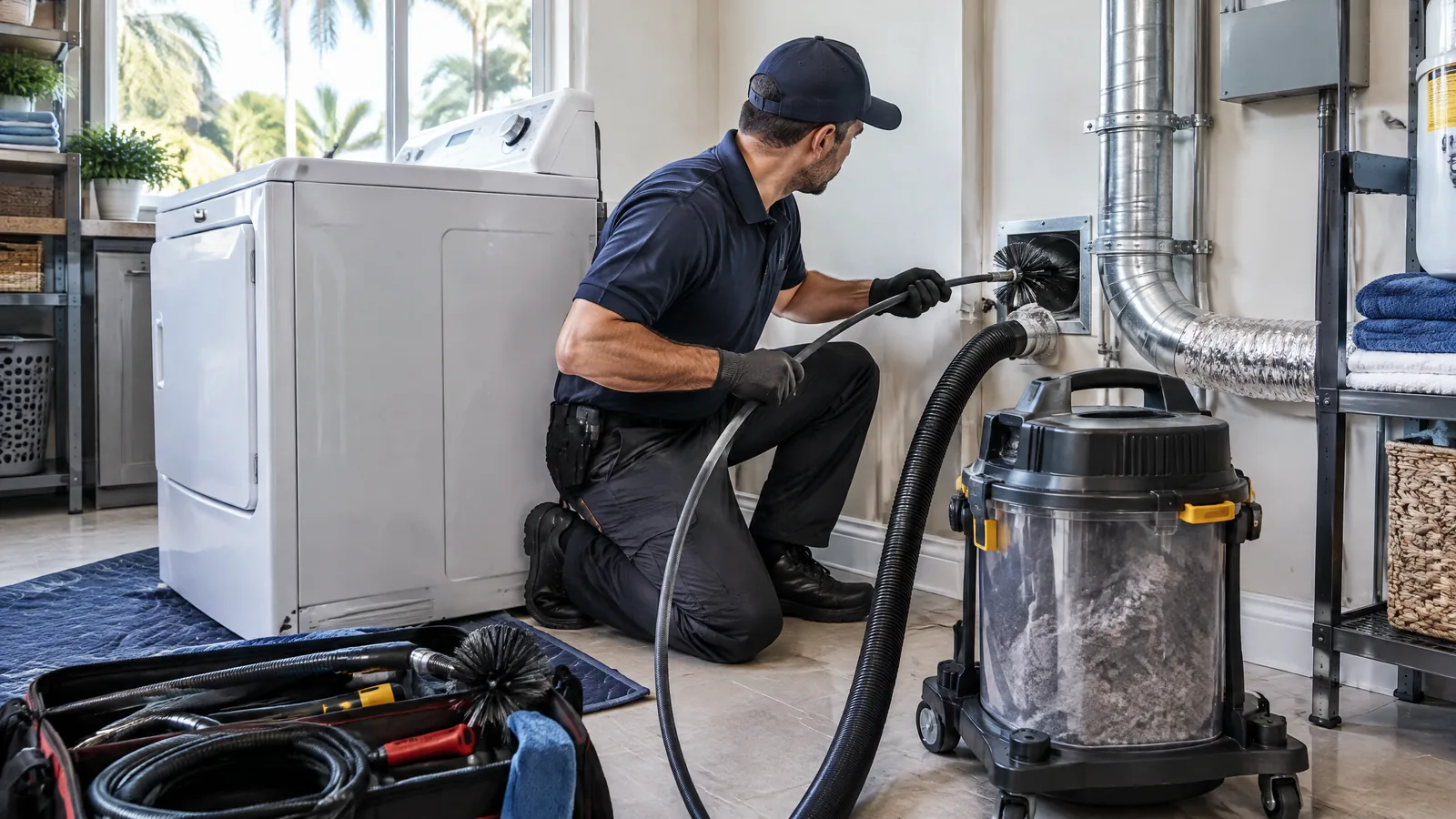
A dryer needs a clear exhaust path to move warm, moist air outside. Lint that escapes the screen can collect along that route, restricting airflow and making the appliance work longer and hotter. That condition can contribute to fire risk, but cleaning is not a guarantee and it does not explain every drying problem.
This guide helps homeowners and property managers recognize warning signs, take low-risk daily steps, and prepare useful questions before arranging an accessible dryer-vent cleaning. For official reminders, review the U.S. Fire Administration’s appliance and electrical safety guidance and clothes-dryer fire-safety flyer.
Why a restricted exhaust path matters
Every load sends heat and moisture through the dryer exhaust. When lint or another obstruction narrows the route, air leaves less effectively. Clothes may take longer to dry, the appliance may run through repeated cycles, and the laundry area may feel hotter than usual. Historically, failure to clean has been identified as a leading contributing factor in reported home dryer fires; that supports regular attention, not a promise that one cleaning eliminates risk.
A warning sign is not a diagnosis. Poor drying can also relate to installation, the appliance, the outlet, or another condition outside a vent-cleaning visit. Do not keep increasing cycle time to compensate for a problem you have not investigated.
Warning signs to notice without taking risks
Watch for clothes that need several cycles, weak airflow at the exterior outlet, lint near the dryer connection, or unusual heat around the appliance. If the outdoor flap can be observed safely from ground level, little movement while the dryer runs may be worth noting. Record when the change began and whether it affects particular loads.
Do not reach into the exterior outlet, remove guards, climb to inspect a high outlet, or disassemble the dryer. Keep the area around the appliance clear and follow the manufacturer’s installation and use instructions.
Every-load habits and a sensible cleaning plan
Clean the lint screen after every load, keep combustible storage away from the appliance, and follow the manual. Working smoke alarms and attentive operation remain essential; vent cleaning is only one part of dryer safety.
Before scheduling a visit, ask what accessible portion of the exhaust route will be reviewed and cleaned, how limited access will be recorded, and whether a shared route or building approval affects planning. Air Duct Cleaning Now’s dryer-vent work is limited to accessible vents without system disassembly; registers, grilles, central equipment, and system components are not opened or removed. Request a written scope identifying exclusions and conditions that need a separate appliance or installation professional.
When to stop using the dryer
Stop the appliance immediately if you see smoke, smell active burning, or observe signs of overheating. Do not run another cycle to finish a load. Follow the manufacturer’s emergency instructions and seek urgent help when there is immediate danger. A cleaning appointment is not emergency response.
Cleaning may reduce lint-related restriction when that is within the accessible scope, but it does not guarantee fire prevention, improved energy efficiency, or a solution to every drying-time change.
Related guidance and limitations
See Do Air Ducts Need Cleaning?, Dryer Vent Cleaning for Miami Condos, and Low-Cost Air Duct Cleaning Offers: 7 Questions Before Booking. You can request a consultation to discuss access and scope; an inquiry is not a final quote.